Victoria Park Home Insurance: Your 4-Point Inspection Guide
September 10, 2026
September 10, 2026
A few years ago, a buyer under contract on a 1970s home in Victoria Park hired TruView Inspections for the standard walkthrough before closing. The inspector found a split-bus electrical panel, galvanized supply lines feeding two bathrooms, and a roof with mismatched tiles that pointed to a prior patch job nobody had disclosed. The seller ended up crediting the buyer $14,000 at closing. Nothing about that house was unusual for the neighborhood. That is the point.
Victoria Park was platted in the 1920s and built out over the decades that followed in a mix of Spanish Mission cottages, Mediterranean Revival estates, Art Deco touches, and Craftsman bungalows. That architectural range is a large part of why people want to live there. It is also exactly the housing stock that Florida's property insurance underwriting rules are built to scrutinize, and in 2026 those rules changed in a way that has less to do with how old a roof is and more to do with whether that roof's history can be found in a database.
A 4-point inspection looks at four systems: roof, electrical, plumbing, and HVAC. It is not a home inspection and it is not a safety check. It exists so an insurer can decide whether to accept a property as risk, and most carriers start asking for one somewhere between 20 and 25 years of age, with the exact threshold varying by company.
For a Victoria Park bungalow built in the 1940s or a Mediterranean Revival estate from the same era, that threshold was crossed decades ago. Homes like these commonly still carry original galvanized plumbing, knob-and-tube or aluminum wiring, and HVAC systems well past their expected service life. None of that makes a house unsellable. It does mean the four-system report is where a transaction either moves forward cleanly or stalls while someone tracks down documentation nobody thought to keep.
According to Mesa Insurance, Florida law has protected roofs under 15 years old from being denied coverage on age alone since 2021, and that has not changed. What changed this year is how insurers verify what happens above that line.
Citizens Property Insurance requires additional roof documentation for shingle roofs older than 25 years and for tile, slate, clay, concrete, or metal roofs older than 50 years, unless a licensed inspector certifies at least five years of remaining useful life. Starting with new applications effective August 1, 2026, Citizens can pull the year of a home's last roof update directly from third-party data rather than relying on what the homeowner reports. Senate Bill 808, effective July 1, 2026, widened the pool of professionals who can legally perform roof inspections, which should make getting one easier. But the more consequential shift is the first one: for the first time, an outside data source can flag a Victoria Park roof as unverified before a human ever looks at the file.
That distinction matters more here than in a subdivision built in 2005. A roof replaced on a 1930s cottage in 2016 with a properly closed permit will show up clean. A roof replaced the same year without a final inspection, or one where the permit was filed under a previous owner's name and never cross-referenced, may not surface the same way. The house itself has not changed. What the underwriter can verify about it has.
None of this is happening against a backdrop of a tightening market across the board. Citizens filed for an average 2.6% rate cut on personal lines starting in June 2026, and several private carriers have loosened their own thresholds back toward 25 to 30 years after a stretch of stricter underwriting. The market is not punishing older homes more than it used to. It is asking for better paperwork to prove they qualify for the leniency that already exists.
Victoria Park's mix of architectural styles means the same age threshold hits different roofs very differently.
| Roof material | Typical insurable range | Common in Victoria Park |
|---|---|---|
| Asphalt shingle | 15 to 20 years before scrutiny increases | Craftsman bungalows, mid-century ranch infill |
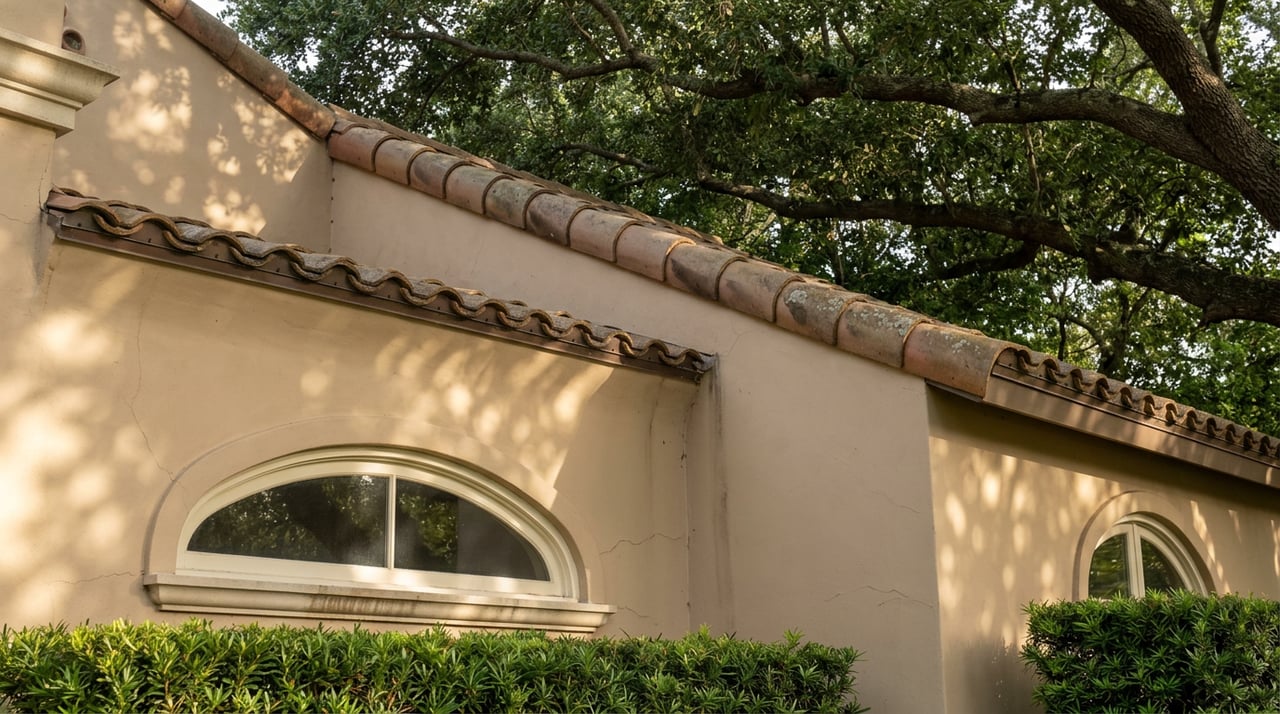
| Clay or concrete tile | 25 to 40 years | Mediterranean Revival and Spanish Mission homes |
| Metal | 30 to 50 years | Modern infill and recent reroofs |
A tile roof on a Mediterranean Revival home can be older in calendar years than a shingle roof on a newer bungalow and still be the easier sell to an underwriter, provided the material and installation date are documented. That is worth knowing before assuming a home's age alone tells you anything about its insurability.
This is the piece that catches people. Fort Lauderdale's city permit records, including many older and city-issued permits, are held in the city's Accela Citizen Access system. Broward County's Building Code Division handles unincorporated areas, but Victoria Park has been part of the city for decades, so city records are the first stop, not the county's.
Broward's official recorded documents, including deeds and satisfied liens, are searchable online back to 1978. Anything recorded before that, which covers the earliest wave of Victoria Park construction, exists only in physical or archival media and has to be requested in person or through a records request to the county. A home built in 1928 with a roof replacement permit pulled in 1975 will not show up in a routine online search no matter how thorough it is.
That gap did not matter much when a human underwriter or the homeowner simply attested to a roof's age. It matters more now that an automated system is the first checkpoint.
Gathering this before a home goes on the market, rather than after an offer arrives, turns a potential delay into a non-issue.
Victoria Park's boundaries run from NE 10th Street to Karen Canal to East Broward Boulevard to North Federal Highway, and flood zone designation varies within that footprint. Portions of the neighborhood fall in FEMA's AE flood zone. Other blocks sit in the X zone. An elevation certificate, which establishes a specific home's height relative to base flood elevation, is worth obtaining before listing or making an offer, since it affects both insurance cost and how a buyer's lender treats the file.
Does a new roof automatically clear an old electrical panel? No. The 4-point evaluates all four systems independently. A new roof does not offset a flagged panel or unrepaired galvanized plumbing.
Can a home sell as-is without a 4-point inspection? A seller can list as-is, but the buyer's insurer will still typically require the inspection before binding a policy, so skipping it only delays the conversation rather than avoiding it.
Does being in an X flood zone mean insurance is simpler overall? It removes the mandatory flood insurance requirement for a federally backed loan, but it has no bearing on the 4-point inspection or roof-age documentation, which are evaluated separately.
Victoria Park's oldest homes are not becoming harder to insure in 2026. They are becoming harder to insure quickly if the paperwork behind a roof, a panel, or a repipe was never digitized in the first place. For a seller, that is a solvable problem with enough lead time. For a buyer, it is a reason to ask for the permit history before the inspection contingency deadline, not after.
If you are weighing a purchase or a listing in Victoria Park and want a clear read on what a specific property's system history looks like before you're under contract, Glen Primak can help you get ahead of it. Start with a free home valuation or take a closer look at the Victoria Park neighborhood page to see how this fits into the broader picture of buying or selling here.
This article is general information, not legal, tax or financial advice. Consult a qualified professional about your situation.
Provides discreet, strategic guidance in South Florida’s luxury waterfront market. With $100M+ in sales and strong property listings, he delivers exclusive opportunities and seamless transactions.

ADDRESS
648 George Bush Blvd
Delray Beach, FL 33483