Is Victoria Park a Historic District in Fort Lauderdale?
September 3, 2026
September 3, 2026
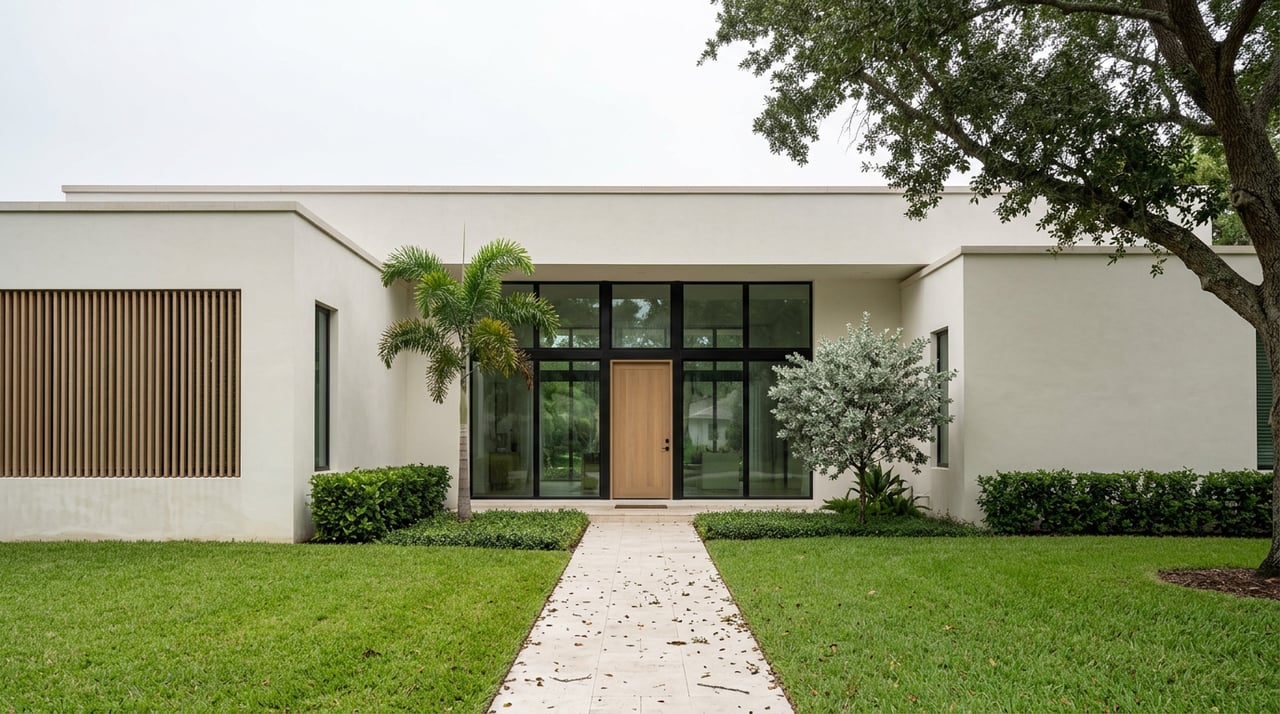
Walk any block in Victoria Park on a weekend morning and you'll see the contradiction before you can name it. A 1920s Mediterranean Revival cottage with its original barrel tile roof sits three doors down from a three-story glass and concrete townhome that broke ground within the last two years. Nobody stopped either project. Nobody required the new build to match the old one's roofline, its setbacks, or its materials. If you assumed that's what "historic neighborhood" means, the block itself is telling you otherwise.
That word gets used constantly here. Civic association pages, longtime residents, and more than one competing agent's buyer guide describe Victoria Park as one of Fort Lauderdale's premier historic neighborhoods. It's not wrong about the age of the housing stock. It's wrong, or at least badly incomplete, about what the city actually regulates.
In everyday conversation, historic means old and charming. In Fort Lauderdale's building department, historic means something narrower and more consequential: a designation that triggers Historic Preservation Board review before an owner can change a structure's exterior appearance.
Those are not the same claim, and the gap between them is exactly where a buyer's assumptions get expensive or, depending on which direction you're coming from, expensively wrong. A buyer moving from a true historic district elsewhere might assume Victoria Park carries the same restrictions and be pleasantly surprised at how much latitude they actually have. A buyer assuming the neighborhood's character is protected the way a formal district protects it might be unpleasantly surprised the first time a builder buys the lot next door.
The city's own historic preservation program is specific about this. Fort Lauderdale currently maintains three locally designated historic districts: Colee Hammock, Rio Vista, and Sailboat Bend. Victoria Park is not one of them.
Inside those three districts, any exterior change requires a Certificate of Appropriateness, reviewed under the criteria in the city's Unified Land Development Regulations. The certificate of appropriateness process covers additions, new construction, demolition, and relocation, and the application itself asks for a narrative, drawings, photographs, a property survey, and proof of ownership before staff or the board will even consider it. Minor maintenance and in-kind repairs can be handled administratively. Anything more substantial goes to a public hearing.
None of that applies to a standard Victoria Park lot. The neighborhood sits under ordinary single-family residential zoning, and additions, renovations, teardowns, and rebuilds move through the same permit process as anywhere else in the city that isn't locally designated. No certificate. No board hearing. No requirement that new construction echo what it replaced.
There is a genuine exception, and it's small enough that most buyers never encounter it directly. Victoria Courts, platted in 1926 by developer Ralph Horton as part of the original Victoria Park subdivision, carries its own historic designation from the city. It's a pocket of cottages, not the whole neighborhood, and it's the closest thing Victoria Park has to the protections that blanket Colee Hammock or Rio Vista in full.
If a listing sits inside that specific enclave, the calculus changes and a buyer planning exterior work should ask directly whether the parcel falls within its boundaries before assuming either way.
You can watch the absence of a historic overlay play out in real time. New construction in Victoria Park right now includes Regency Park, a 24-townhome project designed by architect Kobi Karp, the One Palm development's twelve modern twin homes, and a coming portfolio of wellness-focused residences from H-18 Development. None of these required a certificate of appropriateness, because none of them sit inside a designated district.
That freedom cuts both ways on price. Teardown lots draw a real premium from builders precisely because there's no board standing between purchase and permit, and the resulting new construction tends toward a contemporary look that sells at a different number than the cottage it replaced. Market trackers placed Victoria Park's neighborhood median sale price near $1.1 million as of January 2026, a figure that blends 1920s bungalows, mid-century ranches, and brand-new three-story builds sitting on the same streets. A single median across that mix tells you less than the zoning does about what any individual block will look like in five years.
For more on how Victoria Park's pricing splits along its zoning lines, our earlier look at the neighborhood's RMM-25 boundary covers the multifamily side of this same pattern.
If you're comparing Victoria Park against Colee Hammock or Rio Vista, the historic label isn't the tiebreaker most buyers think it is. What you're actually choosing between is regulatory posture.
In a true historic district, buying the house next to a beloved 1920s cottage means that cottage's silhouette is largely locked in. Redevelopment risk is lower, but so is your own flexibility if you're the one who wants to add a second story or replace original windows with something more energy efficient. Renovation there means a Certificate of Appropriateness conversation first, a standard permit second, and a cost premium for materials and design work that satisfies board review.
In Victoria Park, you get the opposite trade. You can buy an original cottage and expand, modernize, or eventually rebuild it without a board hearing standing in your way. But that same freedom applies to your neighbor, which is exactly how a modern townhome ends up next to a 1930s Spanish Mission home with nothing in the code requiring them to relate to each other. Quality renovation work in South Florida is running in the range of $150 to $300 or more per square foot in 2026 depending on scope and finish level, and in Victoria Park none of that budget needs to account for historic board approval, a real difference in both time and cost versus the same project three blocks south in Colee Hammock.
Neither posture is better. They just serve different buyers, and the neighborhood's marketing language doesn't make that distinction for you.
The Victoria Park Civic Association tracks development proposals and neighborhood character issues as they come up, and its next meeting is scheduled for Wednesday, September 2, 2026, at St. Anthony's Cafeteria, a reasonable place to hear how current residents are talking about the pace of teardowns and infill in real time.
Does this mean nothing in Victoria Park is protected? Victoria Courts carries its own historic designation. The rest of the neighborhood does not carry a historic overlay, though standard zoning, setback, and lot coverage rules still apply to any project.
Is Colee Hammock's protection uniform across the whole neighborhood? Not entirely. The portion of Colee Hammock west of 16th Avenue carries multifamily zoning, which has allowed newer townhome development to rise even inside a district otherwise known for its historic homes.
How would I find out if a specific address carries any designation? A title search and a direct check with the city's Urban Design and Planning Division will confirm a parcel's status faster than any neighborhood reputation will.
Whether you're drawn to Victoria Park for the freedom to build something new or you're weighing it against a true historic district for the opposite reason, the zoning code matters more than the label on the listing. If you want a clear read on what a specific property or block actually allows before you write an offer, Glen Primak can walk you through it, or start with a free home valuation to see where your own property fits into this market.
Provides discreet, strategic guidance in South Florida’s luxury waterfront market. With $100M+ in sales and strong property listings, he delivers exclusive opportunities and seamless transactions.
ADDRESS
648 George Bush Blvd
Delray Beach, FL 33483